
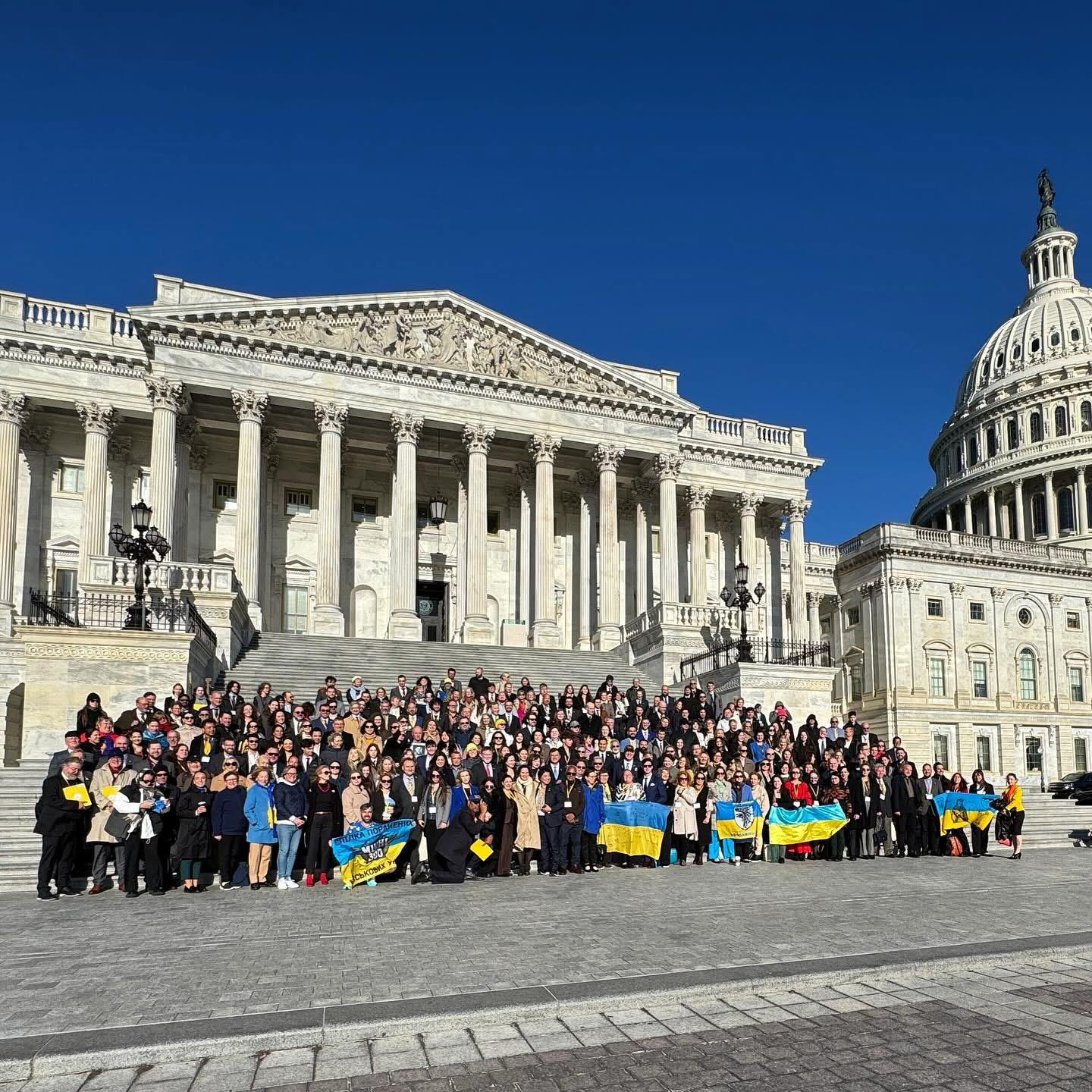
DISPATCHES FROM THE AMERICAN COALITION FOR UKRAINE’S SPRING SUMMIT
Author: Jared Roberts
When Russia launched its full-scale invasion of Ukraine, the shockwaves reached far beyond Eastern Europe. Across the United States, ordinary Americans responded with extraordinary conviction. Some were Ukrainian Americans raised in deeply rooted diaspora communities. Others had no ancestral ties, but felt compelled by a profound sense of justice, solidarity, and moral clarity. Together, many of them have built a growing, bipartisan grassroots movement — one that blends advocacy, aid, and education into a powerful force for positive impact. Through their collective efforts, they are helping to shape US policy, shift public opinion, and remind elected leaders that Ukraine’s fight is not just theirs — it’s ours too. While not the first time the American Coalition for Ukraine (ACU) has arrived in the US Capitol to advocate for Ukraine’s cause, the Spring 2025 Ukraine Action Summit (UAS) marked a historic milestone with more than 600 delegates representing every US state plus Puerto Rico. Their mission was clear and urgent:
1. Secure an enduring and just peace for Ukraine, not a fragile ceasefire.
2. Hold Russia financially accountable for the immense destruction it has inflicted.
3. Demand the return of thousands of Ukrainian children illegally abducted and relocated to Russia.
4. Expose and stop religious persecution and human rights abuses in occupied territories.
These were the pillars that united a diverse and determined coalition—a growing group that believesdefending Ukraine’s freedom is inseparable from defending the ideals America itself was founded upon.
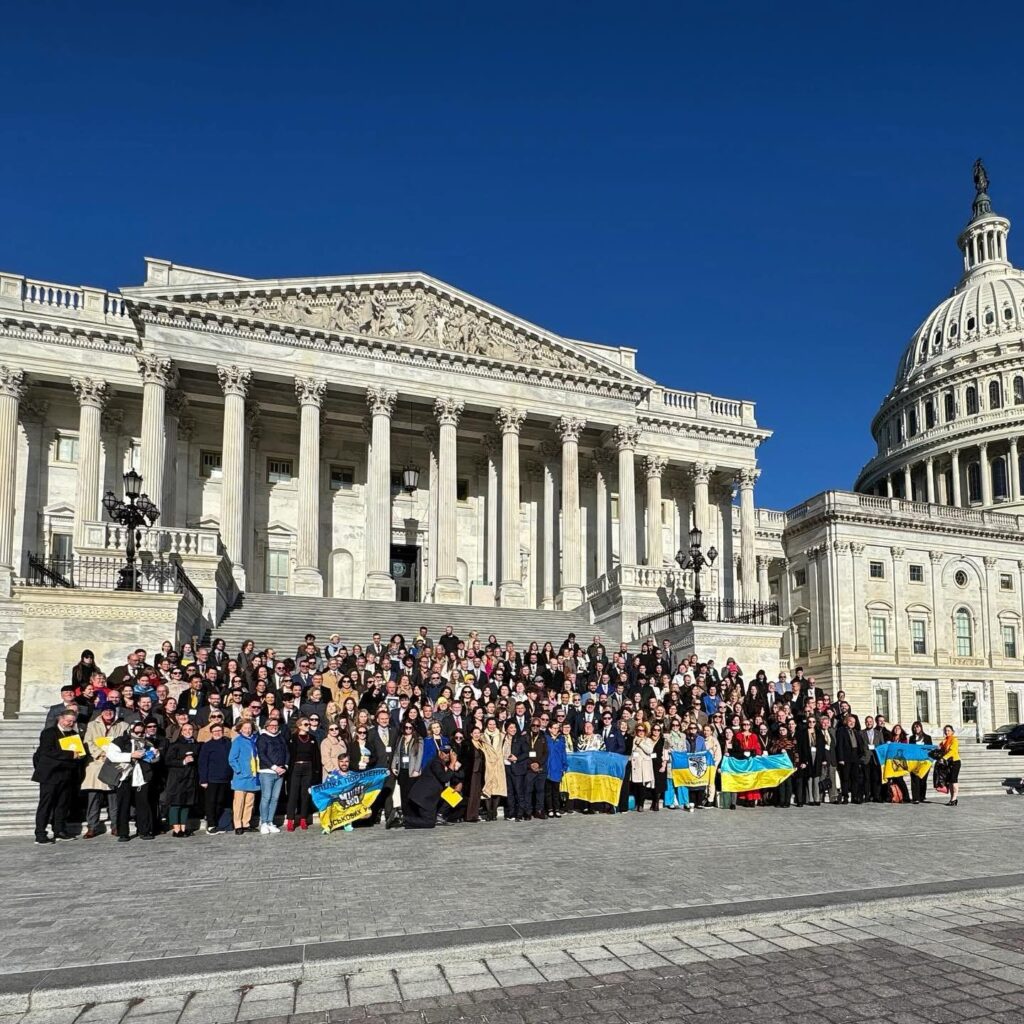
SARAH CHADZYNSKI: Conducting a Chorus of Conscience.
Sarah Chadzynski didn’t enter the fight for Ukraine from a think tank or foreign policy roundtable — she entered it because she couldn’t sleep. When Russia launched its full-scale invasion in February 2022, Sarah — a nonprofit leader, educator, and mother of three in New Hampshire — felt compelled to act. Leveraging her background in nonprofit management and education — and a personal connection through her husband’s Polish diaspora family — Sarah began volunteering with Dattalion, helping deliver firsthand wartime testimony to US lawmakers. Early on, she saw a major challenge: a flood of well-meaning groups were showing up on Capitol Hill with no unified message, making it harder for Congress to know how to act. That realization helped drive Sarah’s role in supporting and leading the efforts of the ACU, now the largest grassroots network dedicated to Ukraine advocacy. Through shared messaging, collective training, and national summits, the ACU helps ensure that when Americans speak up for Ukraine, their voices are focused and their actions are strategic. At the Spring 2025 Summit, that coordination was on full display — over 600 delegates met with more than 440 congressional offices using the same talking points and pitching targeted legislative goals.
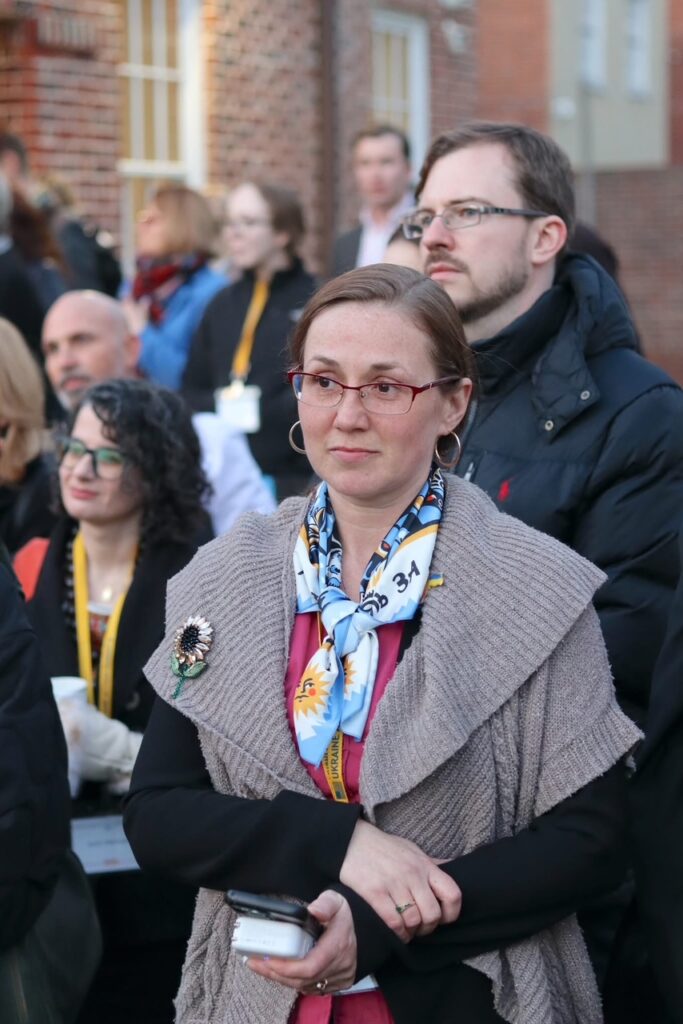
Sarah’s background in education brought a focus on feedback and iteration — a mindset that’s helped shape ACU’s evolving structure. Each summit builds on lessons learned, helping channel grassroots energy into lasting impact. That framework is what enables the ACU to do what few advocacy groups can: host multiple Congressional fly-ins each year, with participation from all 50 states. Every detail — from stuffing thousands of folders to leading breakout sessions and coordinating Hill meetings — is handled entirely by volunteers.
“You don’t have to be a policy expert. You just have to care enough to show up — and we’ll help with the rest.”
For Sarah, the ACU’s impact isn’t limited to Capitol Hill — it’s about unlocking civic engagement at home. People who once felt powerless are now organizing meetings, shaping policy, and finding their voice in the democratic process.
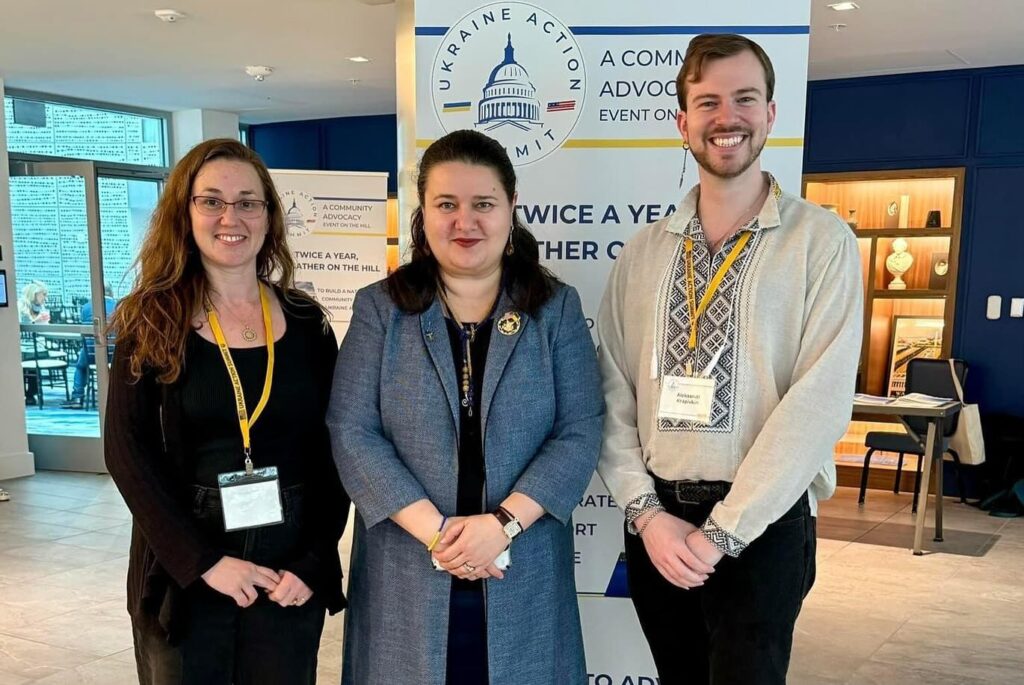
JACQUELINE COLGAN: Compassion Without Borders.
Jacqueline Colgan, who splits her time between New Jersey and Nantucket, Massachusetts, had no Ukrainian heritage herself — but a family connection through her daughter-in- law and a profound sense of moral clarity drove her to act. Like many Americans, she was devastated by early images of families fleeing violence and children walking across borders with nothing but the clothes on their backs. Refusing to look away, she joined Nantucket Cares, a grassroots initiative that raised about a quarter of a million dollars in just two weeks to provide direct aid to refugees arriving in Poland. Her group traveled to the Warsaw train station, distributed critical supplies, and even procured transportation for families trying to reunite with loved ones across Europe.
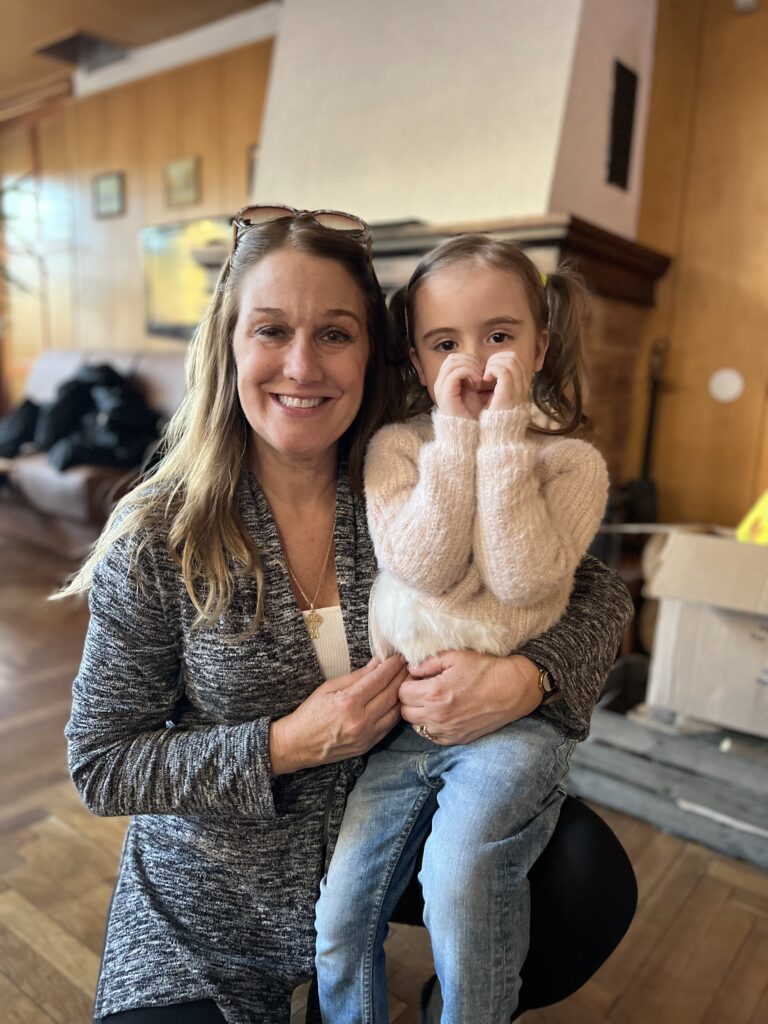
Jacqueline’s experience on the ground transformed what began as an urgent response into a long-term commitment. She worked at World Central Kitchen, handing out food and water to mothers and grandmothers who had fled under fire. On the one-year anniversary of the full-scale invasion, she returned to Ukraine with a gubernatorial delegation, meeting children at a school for orphans and visiting Kyiv, Irpin, and Bucha to speak with local officials and embassy staff. One of her most impactful efforts was helping bring a shrapnel-ridden children’s slide from Irpin to the United States. The artifact — a rusted, scarred piece of playground equipment shelled by Russian forces — has since been displayed in the US Capitol, at Art Context Miami, and at Ukraine House in Washington, DC. It stands as a powerful testament to the war’s toll on innocent lives.
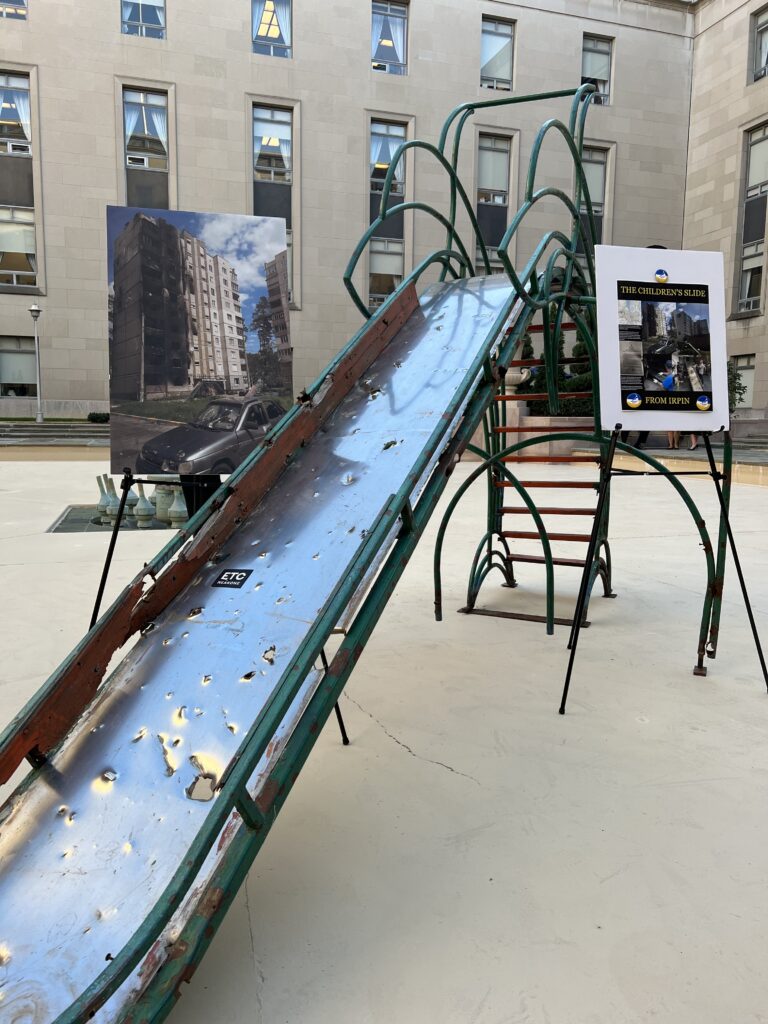
“We needed something tangible that Americans could see to best understand what Russian soldiers will do to innocent Ukrainian children. That slide tells the story better than any news headline ever could.”
Jacqueline has worked closely with Ukrainian mayors, faith leaders, and nonprofits to amplify voices from the ground and ensure their stories reach U.S. policymakers. Through the American Coalition for Ukraine, she continues to advocate on critical issues — from the abduction of children to religious persecution in occupied territories — while calling for sustained U.S. engagement. What gives her hope is the unshakable strength of the Ukrainian people: their will to fight, rebuild, and survive, often expressed through extraordinary conviction and gratitude even amid profound hardship.
EDWARD MA: Ukraine as a Second Home.
Edward Ma’s connection to Ukraine runs deep. After serving in the US Peace Corps in Dnipro, he stayed to build a life and launch a small business — investing not only his time, but his heart, into the communities around him. That life was upended in 2014, when Russia’s occupation of Crimea and the outbreak of hostilities in the Donbas forced him to leave the country he loved and return to the United States. Now based in Texas, he leads Ed’s Friends Ukraine, a nonprofit that delivers medical aid, ambulances, and surgical support to hospitals across Ukraine. His organization has enabled American doctors to perform surgeries in conflict zones and helped wounded civilians receive critical care that would otherwise be out of reach.
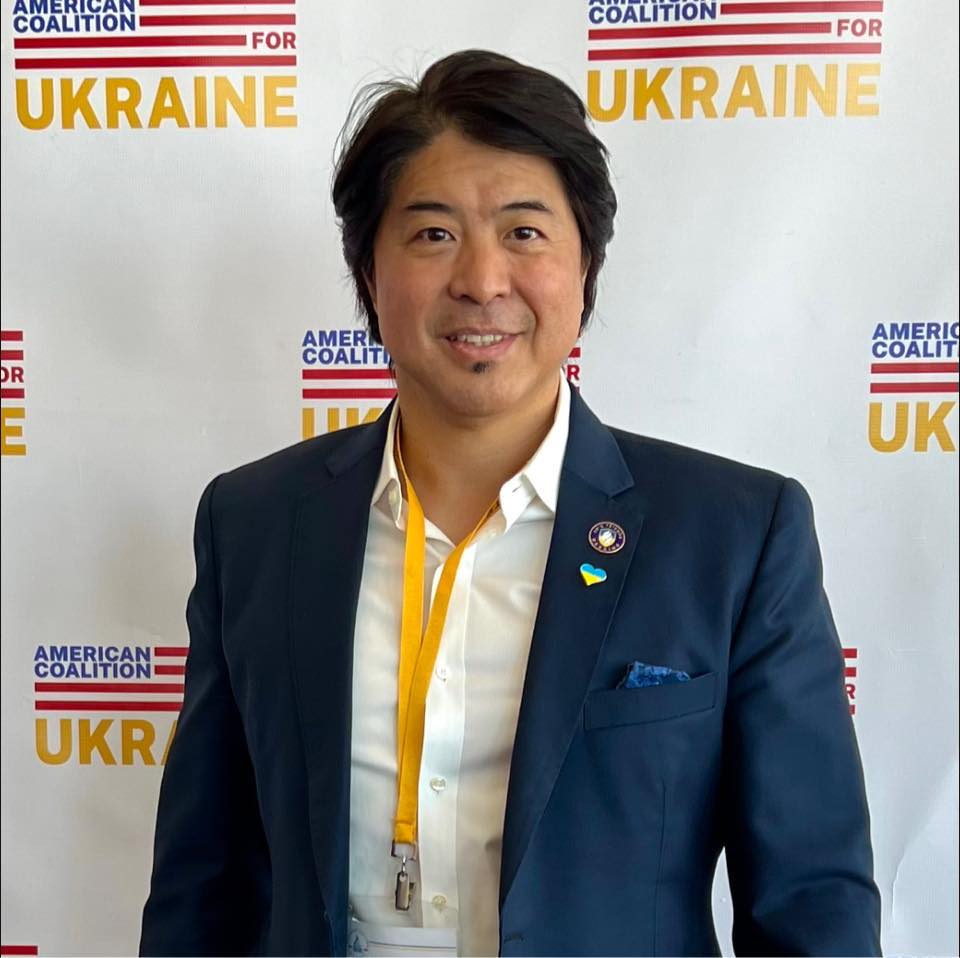
“Ukraine is my adopted home country — it’s a second home for me. Helping it survive is not a choice for me. It’s a duty.”
During the Ukraine Action Summit, Edward’s team helped coordinate the transfer of a young girl injured in a helicopter crash to Texas for reconstructive surgery — a mission made possible through partnerships with US-based advocacy networks. In addition to urgent cases like this, he connects American surgeons with Ukrainian hospitals, facilitates medical training programs, and oversees the delivery of high-priority supplies — including tourniquets, trauma kits, and tactical gear — to frontline areas. His work relies on meticulous logistics, trusted networks, and a broad coalition of volunteers and donors across the US and Europe.
For Edward, Ukraine’s fight is not only humanitarian — it’s existential. He sees Russia’s invasion as part of a centuries-long pattern of imperial domination, and believes stopping it now is essential to preventing a far greater catastrophe in the future. At the Spring 2025 summit, Edward pushed for House Resolution 2548, which would impose automatic sanctions on Russia if it breaches any peace agreement. He emphasized that such a policy would give the US leverage in negotiations and send a strong message of accountability. He described it as a vital tool for any administration that hopes to secure lasting peace without compromising on justice.
For Edward, advocacy isn’t an abstract concept. It’s something lived and measured by impact — in lives saved, in policies shaped, and in the moral clarity that comes from standing with those who fight for their own freedom.
CONNOR CARROLL: From Colleague to Advocate
In Minneapolis, Connor Carroll never imagined that his job working on a team that included Ukrainian software engineers would turn into a mission of advocacy. But when the full-scale invasion began in 2022, concern for his friends propelled him into action. He stayed in touch with his team members as they fled Kyiv, moved to western Ukraine, or sought safety abroad. He shared their stories and fundraising efforts on social media, helping raise money for drones, first aid kits, and protective gear.
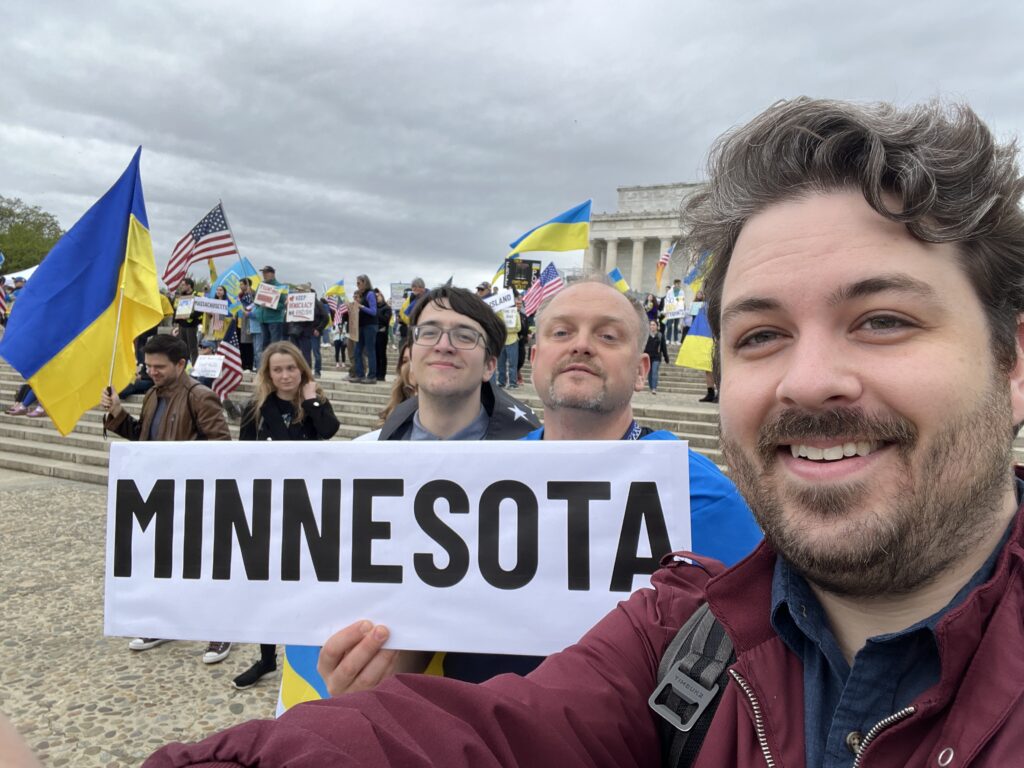
“You don’t have to be Ukrainian to care. If everyone who supports Ukraine in spirit actually contacted their members of Congress, it would have a huge impact.”
Connor’s commitment grew stronger with each summit he attended. Now as delegation leader for Minnesota, he helps coordinate advocacy across the state and speaks publicly about why Ukraine’s security is vital to America’s interests. He also volunteers with Stand with Ukraine Minnesota, a local organization centered in the Twin Cities that brings together Ukrainian Americans and their allies.
Connor sees culture as a gateway to solidarity. Events like fish fries, Ukrainian dance performances, and religious services have helped draw in new supporters, giving his community tangible ways to learn and care. He recalled attending a Friday night fish fry at the Ukrainian American Community Center in Minneapolis where people lined up around the block for pierogies and fried fish. Ultimately, real change comes not just from policy experts or diplomats, but from ordinary citizens who take the time to speak up. He’s seen firsthand how even a handful of phone calls or emails can sway a representative’s stance — and how silence, conversely, can stall critical action. His message is simple but powerful: advocacy works, but only if people engage.
NATALIA LEBEDIN: Upholding a Legacy from Ohio.
Raised in the heart of Canada’s Ukrainian diaspora in Winnipeg, Manitoba, Natalia Lebedin grew up deeply immersed in Ukrainian tradition and patriotism. After relocating to Columbus, Ohio — where Ukrainian culture is far less visible — she more or less welcomed the reprieve from community obligations. But when Russia forcibly annexed Crimea in 2014, and began a full-sclae invasion of Ukraine in 2022, she felt a call to advocacy.
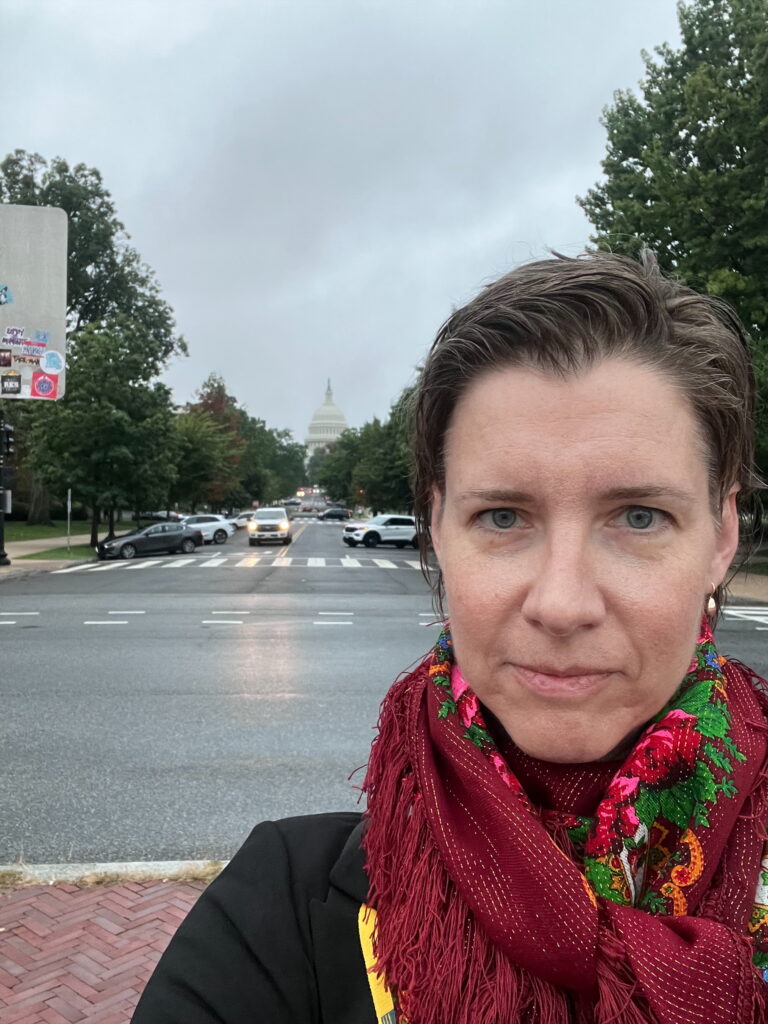
She soon joined the American Coalition for Ukraine and began leading Ohio’s delegation to Capitol Hill. Through the Ukrainian Cultural Association of Ohio, a grassroots, volunteer-run group, she has helped organize cultural fundraisers, culinary workshops, and benefit concerts to raise money for tactical medical supplies. The group’s donations go directly to trusted doctors in Ukraine, who assemble and distribute first aid kits for frontline medics and soldiers.
In addition to her local efforts in Ohio, Natalia supports initiatives like
One World Strong — Unbroken Cities Network, which recently sponsored
wounded Ukrainian veteran, Ivan Drozd, in the Boston Marathon. His story — having lost both his son and his arm in the war — moved her deeply. Despite everything, he radiated optimism and strength. For Natalia, his presence was a powerful symbol of Ukraine’s unyielding spirit.
“This man will never be broken. He just keeps running — toward life, toward light, toward hope.”
Natalia’s advocacy is also shaped by strategic partnerships with figures like retired US Brigadier General Mark Arnold, whose organization trains Ukrainian frontline medics. Arnold, she noted, often reminds American audiences that Ukraine looks and feels a lot like Ohio — the land, the values, the people. At the national level, she sees one of ACU’s greatest strengths as its ability to connect advocates across states and avoid duplicative efforts. Early in the war, she recalls, many rushed to help
without coordination. But ACU brought structure and strategy, linking people, organizations, and logistics to support more sustainable, high-impact work.
“ACU has helped the right people find each other. It’s made a huge difference in avoiding duplicated efforts, streamlining logistics, and building smarter, stronger networks.”
Natalia sees real promise in ordinary Americans showing up to rallies, calling their representatives, and joining efforts to support Ukraine — even without personal ties to the country. What matters, she says, is the clarity of the cause.
RACHEL SMITH: A Lone Voice from Louisiana.
Though Rachel Smith lives in a district with few Ukrainian-American communities, she has become a steadfast advocate for Ukraine. A Russian historian by training, she joined the American Coalition for Ukraine after connecting with NAFO — a decentralized online community countering Russian disinformation — and quickly became a delegation leader for Louisiana. Despite never having met a Ukrainian in person before 2023, she felt compelled to act.
“I knew what was happening — it’s been going on for 500 years. And I said, ‘Not today. It stops this time.’”
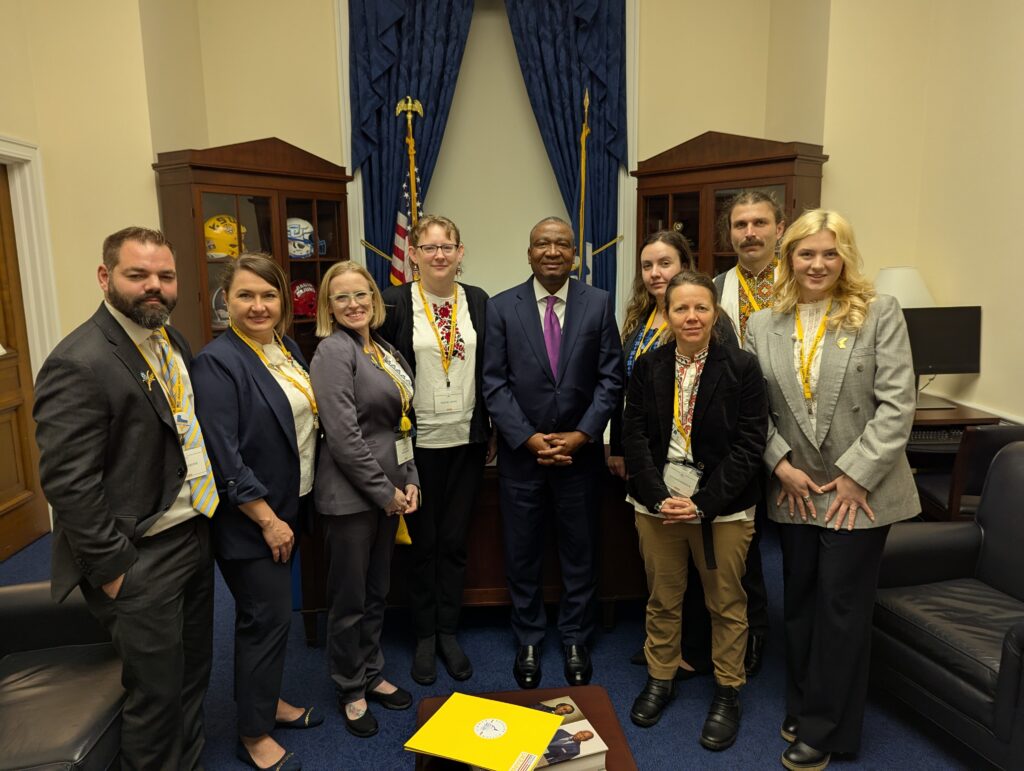
Her advocacy is largely digital — she calls herself an “island” in a politically resistant area — but her persistence has paid off. One of her congressional representatives co-sponsored a Ukraine support bill just 45 minutes after meeting with her delegation. She’s also working with fellow advocates to organize local events in Speaker Mike Johnson’s district, including potential screenings of Faith Under Siege, a documentary on the persecution of non-Russian Orthodox Christians in occupied territories. Rachel brings historical clarity to her work, framing Ukraine’s struggle as part of a centuries-long fight against Russian imperialism. Her message to Speaker Johnson blends ethics with faith:
“Our shared faith requires us to be known for keeping our word… We need to keep our promises and be known as a country that honors God.”
Rachel also uses food as a bridge between cultures. She introduced her family to Ukrainian dishes like borshch, blending local Southern flair with traditional flavors. She refers to sour cream as “Ukrainian ketchup,” and jokes about the sacred status of gumbo in Louisiana. Her passion is deeply personal and rooted in shared belief. During the
Spring 2025 summit, she was moved by a pastor whose family was killed in a missile strike on a church in Odesa. The child’s belongings, displayed at this year, brought her to tears.
“They were bombed because they believe the same things I do…This truly is a black and white war. There are no shades of gray.”
THE AMERICAN COALITION FOR UKRAINE: A Growing Movement.
The Spring 2025 Ukraine Action Summit brought together more than 600 delegates from all 50 states — its largest turnout yet. From Ukrainian-Americans to allies with no direct ties, the message was clear: the fight for Ukraine is the fight for freedom — everywhere.
How You Can Stand with Ukraine Today:
You don’t need to attend a summit to make a difference. Here are a few simple but powerful actions you can take:
- Contact your representatives and urge support for Ukraine and policies like House Resolution 2548.
- Share verified news to combat misinformation and amplify truth.
- Support local Ukrainian groups through events, fundraisers, or volunteering.
- Donate to trusted nonprofits providing humanitarian and medical aid.
- Start the conversation — in your faith group, book club, or community circle. Awareness leads to action.
Freedom isn’t defended only on frontline battlefields — it is safeguarded in town halls, in living rooms, and via regular communication with our representatives in Washington.
The fight for Ukraine is the fight for freedom. And every voice matters.
To read the full version and explore more about Ukrainian heritage and history, order UA Chronicles. Your support helps the Ukrainian Cultural Center of New England continue its educational and cultural projects.